
Lexington, SC · Garage Door Service
Why Cold Mornings Are Spring-Breaking Season in Lexington
Lexington homes built mostly in the 1980s have original torsion springs now hitting 35-40 years old. Cold snaps are when they finally let go. Here's what that job costs.
- Repairs & new doors
- Springs & openers
- Serving 7 nearby communities
The Problem
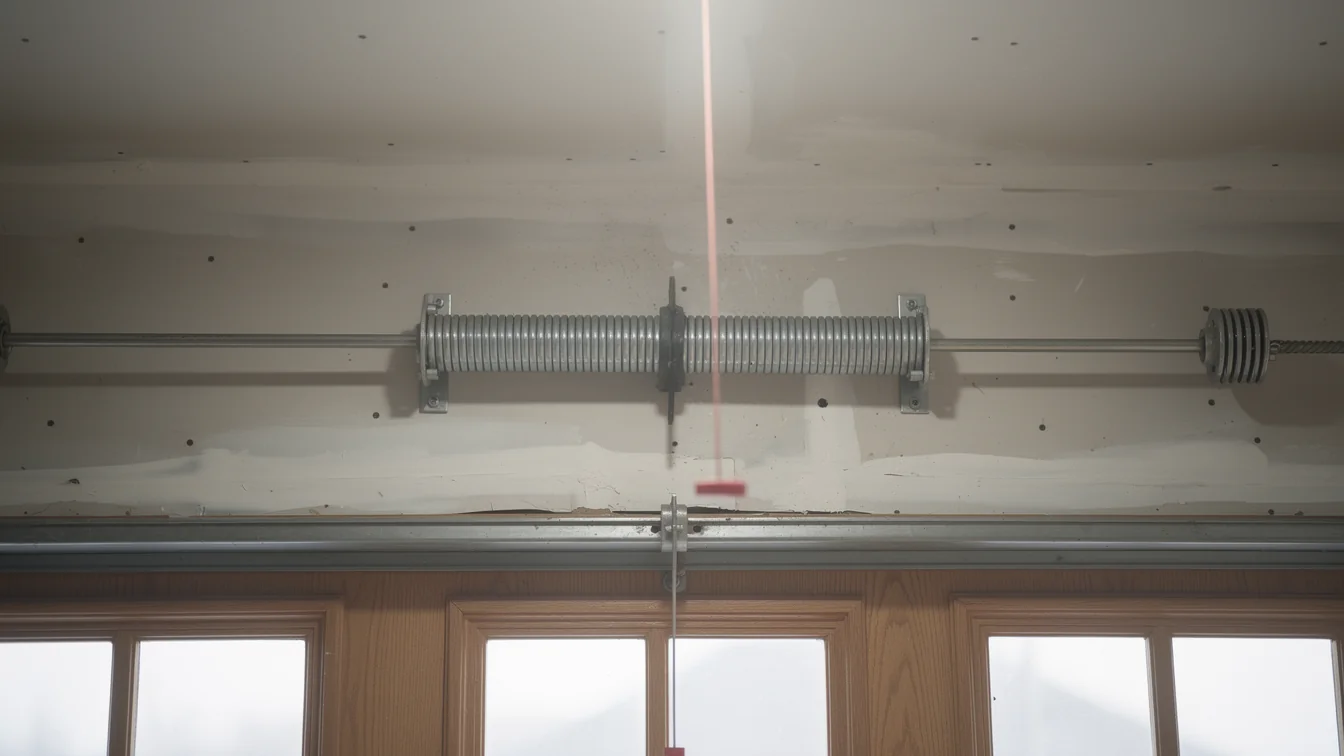
Most of the garage doors we get called out to in Lexington were installed somewhere between 1965 and 2010, with the median build year sitting around 1984. That means a huge share of the torsion springs out there are original or close to it - springs that have been winding and unwinding for three or four decades. Springs don't fail because of one bad day. They fail because steel fatigues, cycle after cycle, and the coating that protects them wears thin over the years. In a mild climate like ours, with only occasional freezes, homeowners don't think about their garage door the way someone in Minnesota might. But steel still contracts when the temperature drops, even here, and a spring that's been losing tension for years will often pick the one cold morning of the season to finally snap. You hear it as a bang from inside the garage, and then the door won't lift, or it slams down on one side because only one cable is still holding. That's not bad luck. That's a 1980s spring reaching the end of a predictable lifespan on a cold day.
Where People Go Wrong
The most common mistake we see in homes across this area is waiting. A spring that's starting to go usually gives a warning - the door feels heavier to lift by hand, or the opener strains and makes a new noise, or the door doesn't sit level in the frame. In a house built in the 1980s or 90s, that's a sign the original spring is tired, not a sign to ignore it until the cold hits. The second mistake is trying to adjust or replace a torsion spring without the right bars and clamps. These springs are under real tension, and the ones built for the door sizes common in this area's 1980s-90s stock are no different - they can take a hand off if they let go while you're working on them. The third mistake, and we see this a lot with the older housing stock around here, is assuming the opener motor is the problem when it's really the spring. A worn-out spring makes the opener work twice as hard, which burns out gears and capacitors that didn't need to go. Fix the spring first; half the time the opener was never broken.
What Local Conditions Do
Our climate band is mild with occasional freezes, not the deep-freeze cycle you'd get further north, so we don't see the same volume of cold-snap failures as a harder climate would. But occasional is the key word - it still gets cold enough, often enough, that a spring near the end of its life finds the moment to fail. Steel loses a small amount of flexibility as temperature drops, and a spring that's already fatigued from 30-plus years of cycling has less margin left to absorb that stiffness. That's really the whole story here: it's not extreme weather doing the damage, it's old spring steel meeting an ordinary cold morning. Humidity plays a role too - the swings between damp summer air and drier cold snaps put more stress on hardware that was installed in the 80s and 90s than a steady, mild climate alone would. None of this means panic every winter. It means the springs installed when these houses went up are due, or past due, and the cold is just the trigger, not the cause.
The Cost of This Job
We don't have a published price list to quote here, so we're not going to make one up. What we can tell you is how the job is scoped: a torsion spring replacement is priced by the size and weight of your door, the number of springs (one or two, depending on whether it's a single or double door), and whether the drums or cables need replacing alongside it on a door this age. If your garage door is original to a house built in the 1980s or earlier, the hardware around the spring is often worn enough that replacing just the spring and leaving 40-year-old cables and rollers in place is a short-term fix, not a real one. With a median household income of $64,003 across the service area, most owners we talk to want the straight answer on whether it's a spring-only job or a hardware-refresh job, and that's a call we make at the door, not over the phone.
Frequently asked questions
How old does a garage door spring have to be before it's a real risk?
There's no hard cutoff, but if your house was built in the 1980s or earlier and the spring has never been replaced, it's well past the point where fatigue is a real concern. Most torsion springs are rated for a number of cycles, not years, and a 35-to-40-year-old spring has usually used up that rating.
Why did my spring break on a cold morning when it's never done that before?
Cold steel is slightly less flexible, and a spring that was already near the end of its life has less margin to handle that stiffness. It's rarely the cold alone - it's usually years of cycling catching up with the hardware at the moment it's least forgiving.
Can I just tighten or adjust the old spring instead of replacing it?
No. Torsion springs are measured for a specific door weight and wind tension, and adjusting an old one doesn't restore the steel. If it's weak from age, tightening it just moves the failure point closer, and doing it without the right bars is dangerous.
Related garage door services in Lexington
More garage door guides
Book garage door service in Lexington
Call now or request a quote - tell us what the door is doing and where you are.