
Lexington, SC · Garage Door Service
Garage Door Work for South Congaree Homes
Service from Lexington, 8 miles out, built around South Congaree's 1981-median housing stock - the springs, tracks, and openers that actually fail on these doors.
- Repairs & new doors
- Springs & openers
- Serving 7 nearby communities
What We Do Not Do
We don't keep a crew or a truck sitting in South Congaree. We run out of Lexington, about 8 miles up the road, and that's the honest version of how this works - you call, we schedule, we drive over. If you need a same-day fix on a Sunday night, say so when you call, but we're not going to promise a depot or a standing presence here that doesn't exist.
We also don't try to rebuild a door that's cheaper to replace. If the track is bent in more than one spot, if the panels are rusted through at the bottom, or if the opener is older than the door itself, we'll tell you straight that a new setup is the better money. Patching a door that's structurally done just moves the next call sooner.
And we don't guess at parts. A lot of torsion spring and opener hardware made before the mid-1980s isn't something every supplier carries, so sometimes the honest answer is a short wait while we source the right part instead of forcing a mismatched one onto your door.
This Area's Housing
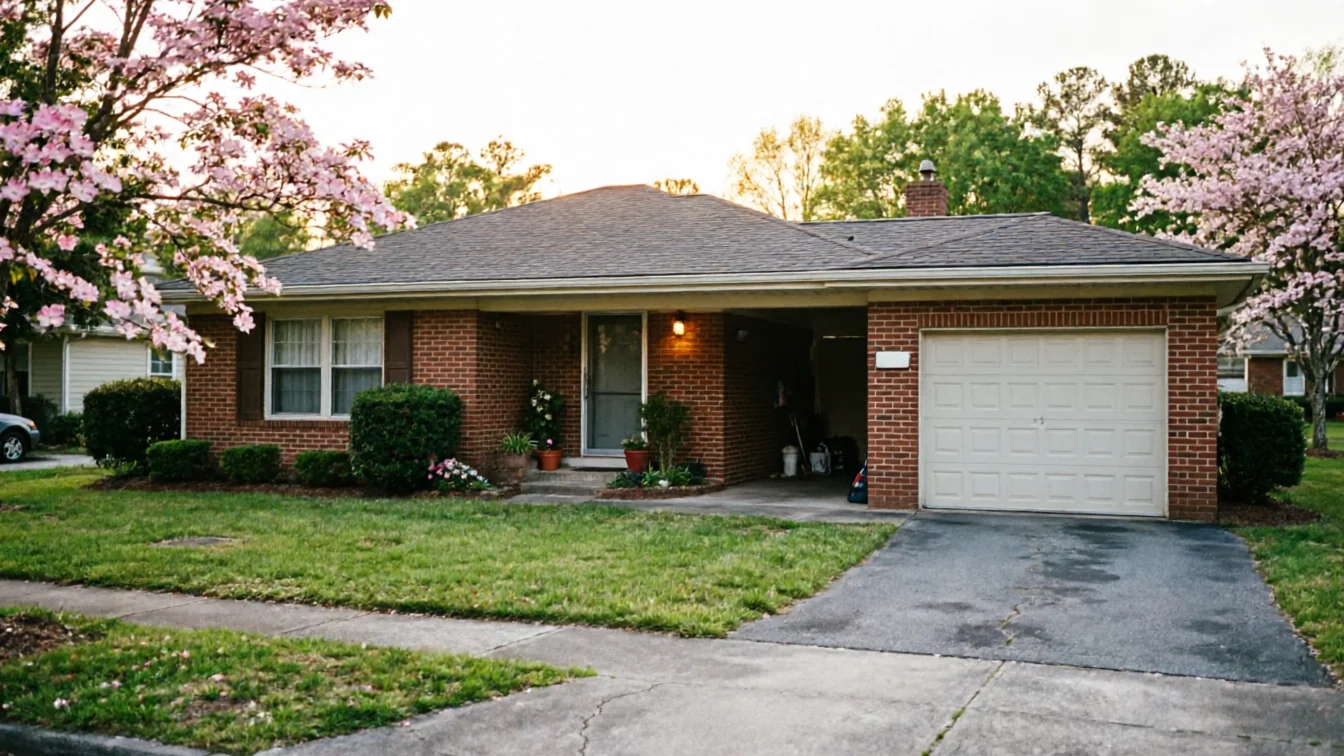
South Congaree's housing skews older than a lot of what Lexington Garage Door Pros sees elsewhere in the service area - the median build year here lands around 1981, a few years ahead of the broader area's 1984 median but still squarely in that first wave of subdivision construction. With 825 households and median income around $58,726, this isn't new-build territory with fresh openers and insulated steel doors. It's a town of doors that have been opened and closed for over four decades.
That 1981 median matters more than it sounds like it should. Garage door hardware from that era was built to a different standard than what goes in today - lighter gauge springs, simpler extension-spring setups instead of torsion, and openers with chain drives that have long since outlived their rated cycle count. A door installed new in 1981 has likely seen one or two spring replacements already, sometimes more, and the opener may be on its second or third motor.
We size parts and quotes around that reality rather than assuming the newer torsion-and-steel-panel setup that's common in areas built after 2000.
How That Shows Up in the Door
On a door this age, the failure pattern is predictable. Extension springs stretched over decades lose tension unevenly, so one side of the door drags or hangs crooked before anything actually snaps. Rollers worn down from forty-plus years of cycles start grinding in the track, and the noise usually shows up months before the door jams for good.
Openers from this era often still run on a chain drive with a sensor setup added later as a retrofit rather than built in - that's a code requirement that came after a lot of these units were installed, so the safety-reverse sensors you see bolted near the floor track are frequently an add-on, not original equipment. Worth knowing if yours looks mismatched; it probably is, and that's normal here.
The climate doesn't pile on the way it does further north - mild winters with the occasional freeze mean we're not fighting ice-locked tracks most years - but humidity swings do work on wood jambs and metal fasteners over four decades, which is part of why track alignment drifts on older installs even without a hard freeze to blame.
The Usual Work Here
The calls we get from this part of the service area are mostly what you'd expect from 1980s-vintage doors: extension spring replacement, roller swaps, and opener sensor repairs where the add-on wiring has worked loose. We also see track realignment jobs more here than on newer builds, since original installs from this period weren't always set with the tolerances modern doors expect.
Full door replacement comes up when the panels themselves are the problem - dents that won't pull out, bottom sections rusted or rotted, or a door that's simply narrower or shorter than current standard sizes, which happens with some older builds. In those cases we talk through what fits the opening rather than forcing a stock size.
One limitation worth saying plainly: if your door uses a less common panel size or an opener model that's been out of production a long time, parts can take longer to source than a same-week visit. We'll tell you that up front rather than overpromise a timeline we can't hit.
Frequently asked questions
Do you have a crew based in South Congaree?
No. We operate out of Lexington, about 8 miles away, and travel out for jobs. There's no local depot or standing crew here - just a scheduled visit when you call.
Why does my 1980s door keep needing spring work?
Extension springs from that era wear unevenly and lose tension gradually rather than failing all at once. A door built around 1981, which is typical for this area, has usually already been through at least one spring replacement by now.
Is my opener's safety sensor original equipment?
Probably not. Many openers installed in this area before current safety-reverse requirements had sensors added later as a retrofit. If the wiring looks bolted on rather than built in, that's likely why.
Should I repair or replace an older door?
If the springs and rollers are the issue, repair usually makes sense. If panels are rusted through, the track is bent in multiple places, or the opener is near the end of its life, replacement is often the better value - we'll tell you which applies.
Garage door services in South Congaree
Every service our crew runs in South Congaree, SC.
Book garage door service in Lexington
Call now or request a quote - tell us what the door is doing and where you are.