
Lexington, SC · Garage Door Service
Garage Door Repair & Installation in Forest Acres
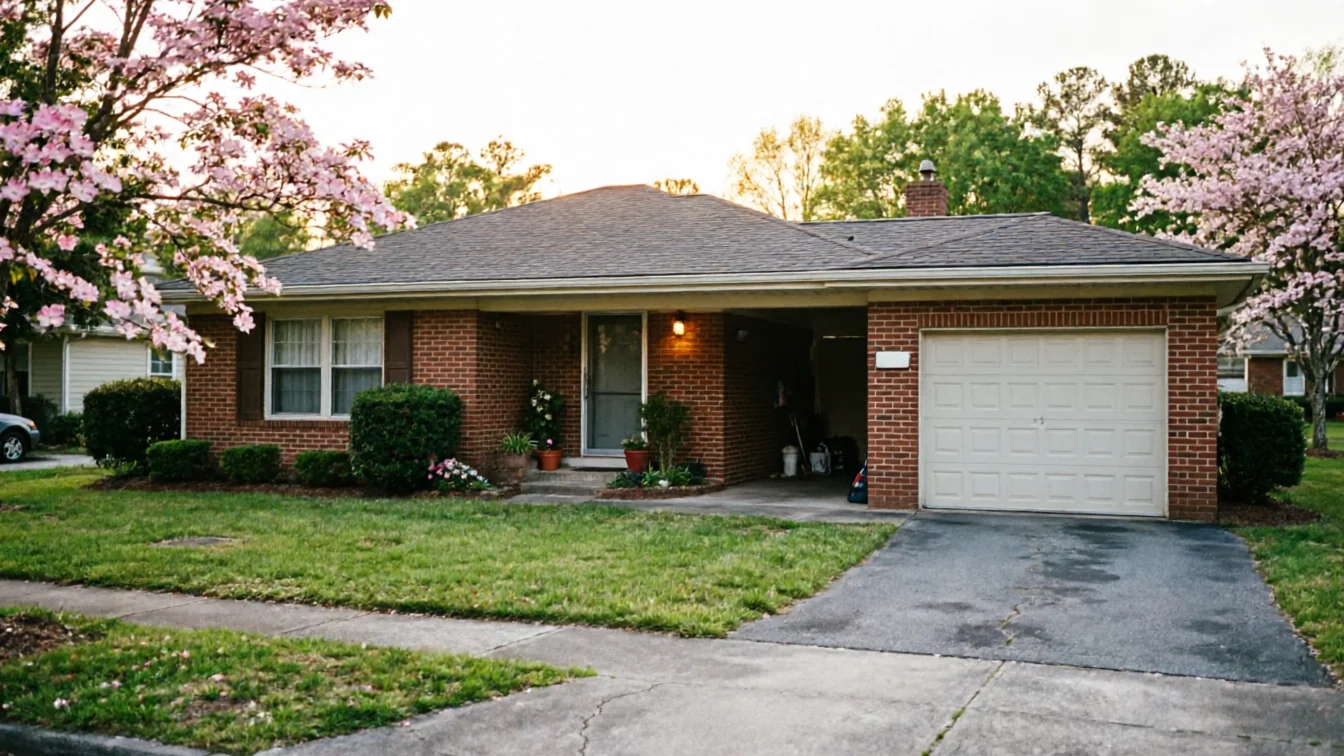
Garage door repair and install for Forest Acres, SC, where most houses date to the mid-1960s. Lexington Garage Door Pros travels 14 miles to work on original hardware.
- Repairs & new doors
- Springs & openers
- Serving 7 nearby communities
What We Do Not Do
We don't keep a depot or a truck parked in Forest Acres. We run out of Lexington, about 14 miles away, and we book the job before we drive it - so same-day isn't something we promise here, and we won't pretend otherwise. We also don't sell doors we can't stand behind with real parts support; if a part for an original 1960s track system is out of production, we'll say so instead of jury-rigging something that fails again in six months. And we don't do cosmetic panel swaps on a door whose opener and springs are shot - if the bones are bad, we'll tell you plainly that a patch isn't worth your money.
If your door needs a same-day fix for something urgent - cable off the drum, door stuck open - call and we'll tell you honestly whether we can get there today or whether it's tomorrow's first stop. Distance from Lexington means we plan routes, not that we're slow, but it does mean we're not the guy who happens to be around the corner.
This Area's Housing
Forest Acres homes mostly went up around 1965 - noticeably older than the broader Lexington service area, where the median build year lands closer to 1984 and the bulk of stock is 1980s-90s construction. That fifteen-to-twenty-year gap matters more than it sounds like it should. A house framed in the mid-60s was built before the garage door and opener industry standardized a lot of what's common now: extension springs mounted differently, headroom clearances that don't match today's torsion hardware, and openers (where they exist at all) that have been replaced two or three times over by owners patching rather than redesigning the setup.
With roughly 4,963 households in the area and a median income around $76,417, this isn't a neighborhood full of flippers tearing out original doors - a lot of these houses have had the same basic door and track setup since they were built, with incremental fixes layered on top. That means when we show up, we're often working around decisions made decades ago by whoever did the last repair, not a clean modern install.
How That Shows Up in the Door
Older framing means older track geometry, and older track geometry means the common failure here isn't the same as it is in a 1990s subdivision. We see more doors on extension springs instead of torsion bars - a setup that was standard for the era but wears differently, with the safety cables that should be threaded through the springs often missing entirely because nobody retrofitted them when the code changed. We also see headroom tight enough that a straightforward torsion conversion isn't a drop-in job; it takes measuring and sometimes a different spring mount than what a newer house would need.
South Carolina's mild climate with occasional freeze doesn't put the stress on hardware that you'd see further north, so steel fatigue from temperature swings isn't the big driver here. The bigger issue is just age and the mismatched generations of patch repairs stacked on an original frame - a roller from the 80s, a cable from the 2000s, an opener bracket added later that was never quite square to begin with.
The Usual Work Here
The call we get most from this part of the service area is a broken extension spring, or a frayed safety cable that finally gave out on a door that's never had one installed correctly. Second most common: openers that are clearly not original to the house, installed at some point as a retrofit, now failing because the bracket or rail doesn't match the door's real weight and geometry.
We also do straightforward torsion conversions when a homeowner's tired of extension-spring maintenance, but we measure headroom first - on a lot of these houses it's tighter than what a newer build gives you, and sometimes the honest answer is that a conversion costs more here than it would elsewhere because of custom bracket work. We'll quote that plainly before we start, not after.
Frequently asked questions
Why do extension springs fail more often in Forest Acres than newer neighborhoods?
A lot of homes here date to around 1965, built before torsion bars were the default. Extension springs were standard then, and they wear on a different cycle - plus many never got the safety cable retrofit that's now code, so when they fail it's often more abrupt and sometimes without the backup cable holding things in place.
Do you keep a truck or office in Forest Acres?
No. We run out of Lexington, about 14 miles away, and book jobs by route rather than keeping a presence in the area. That means we schedule rather than drop by, but we still work on the older hardware common here regularly.
Can my door's original 1960s track hardware still be repaired?
Often yes, with available parts - rollers, cables, and standard spring stock are still made. Where it gets harder is opener brackets or track mounts specific to an old frame; if a part's out of production, we'll say so and talk through a conversion instead of forcing a mismatched fix.
Is a torsion conversion worth it on an older Forest Acres house?
Sometimes, but headroom here is often tighter than in newer construction, so it can take custom bracket work that costs more than a standard conversion elsewhere. We measure first and give you the real number before committing, rather than quoting a flat rate that assumes a modern frame.
Garage door services in Forest Acres
Every service our crew runs in Forest Acres, SC.
Book garage door service in Lexington
Call now or request a quote - tell us what the door is doing and where you are.