
Lexington, SC · Garage Door Service
Garage Door Repair for Red Bank, SC Homes
Lexington Garage Door Pros serves Red Bank, SC, 4 miles out, repairing torsion springs and openers on homes mostly built from the late 1980s through the 90s.
- Repairs & new doors
- Springs & openers
- Serving 7 nearby communities
What We Do Not Do
We don't have a shop or a truck parked in Red Bank. We run out of Lexington, about 4 miles east, and Red Bank is one of the closer stops on the route. That matters because we're not going to pretend there's a local depot or a crew that lives around the corner - there isn't, and we'd rather say so than dress it up.
We also don't sell insulation upgrades here as a cold-weather necessity. The climate in this part of the state runs mild with only occasional freeze, so a double-insulated door isn't doing the job it would in a harder winter climate - it's a comfort and noise choice here, not a must-have. And we don't do structural carpentry. If the jamb behind your track is rotted or the header's sagging, that's a repair for a carpenter before we touch the door again. We'll tell you when a job has moved past hardware and into framing, and we won't try to fix the second problem with the first one's tools.
This Area's Housing
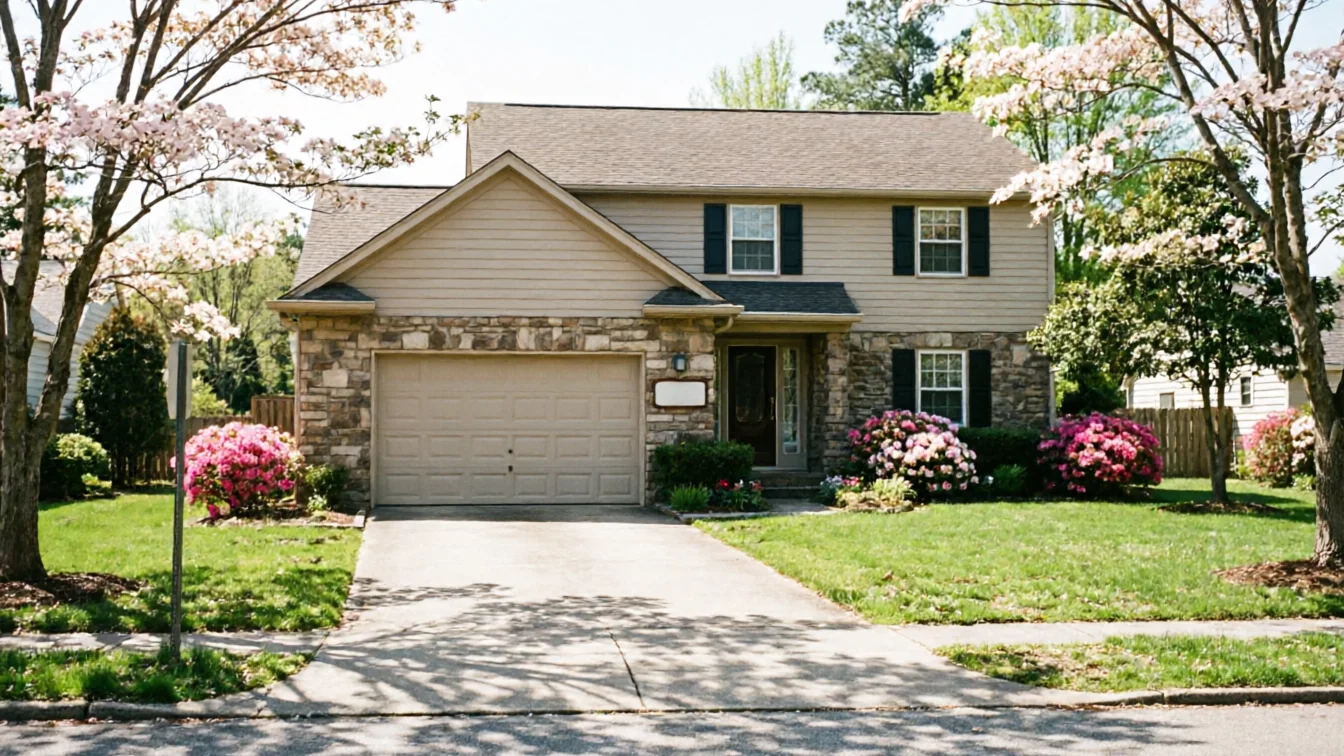
Red Bank skews a little newer than much of the wider service area. The typical house here went up around 1990, compared with a median build year closer to 1984 across the broader coverage zone. It's not a huge gap, but it's enough to matter when you're looking at what's bolted to the header above your car.
The area runs about 4,240 households, smaller than some of the denser pockets we cover, and median income here sits around $60,348 - a bit under the $64,003 median for the service area overall. None of that changes how a spring breaks, but it does shape what people tend to ask for: straightforward repairs over full replacements, and openers kept running a few extra years past when a newer subdivision might swap them out. Houses from 1990 generally came standard with torsion spring systems rather than the exposed extension springs still common in older stock nearby, which is the detail that actually drives the kind of call we get.
How That Shows Up in the Door
A door installed around 1990 is now pushing 35 years on original hardware if nobody's touched it. Torsion springs from that era were rated for a given number of cycles, and most of them have long since used that up - the spring doesn't wear out gradually, it just lets go one day, usually on the coldest or most humid morning of the stretch. With mild winters and only occasional freeze here, you don't get the brittle-metal snap-in-January pattern some colder areas see, but you do get rollers and hinges that have gone through three decades of humidity swings without anyone greasing them.
Openers from that build window are mostly first- or second-generation chain-drive units, often with circuit boards that are no longer made - when one of those fails, repair isn't usually on the table, and replacement is the honest answer. Galvanized hardware from 1990 construction has generally held up fine against rust here; it's fatigue, not corrosion, that ends most of it.
The Usual Work Here
Broken torsion springs are the most common call from this area, almost always on doors original to a house built in the late 1980s or 1990. Second most common is worn rollers and bent track - not dramatic, but it makes the door loud and makes the opener work harder than it should.
We also see a fair number of opener swaps, usually after a board fails on a unit old enough that parts aren't being made for it anymore. Panel dents from the usual driveway mishaps come up too, though a full panel replacement only makes sense if the door's steel is still in decent shape elsewhere - on a door this old, sometimes the better call is a new door rather than patching one section onto 35-year-old steel. We'll tell you which way the numbers point before you spend money on either.
Frequently asked questions
Do you have a crew based in Red Bank?
No. We run out of Lexington, about 4 miles away, and come out to Red Bank for calls same as other spots nearby. There's no local shop or storefront here - just the truck making the drive.
Why did my torsion spring break with no warning?
Torsion springs are rated for a set number of open-close cycles, not a set number of years. A door from a house built around 1990 has likely used up that rating by now, so the spring lets go suddenly rather than wearing out gradually. It's normal for the age of the hardware, not a sign you did anything wrong.
Is it worth replacing my opener or repairing it?
Depends on the age and what failed. If the circuit board on an older chain-drive unit goes, parts for it usually aren't made anymore, so replacement tends to be the only real option. If it's a simpler fix - a sensor, a remote, a chain - repair makes more sense.
Does the mild climate here mean less wear on garage doors?
It helps with rust - galvanized hardware from the 1990s has generally held up well here against corrosion. But it doesn't stop mechanical fatigue. Springs and rollers still wear out from use and age regardless of how mild the winters are.
Garage door services in Red Bank
Every service our crew runs in Red Bank, SC.
Book garage door service in Lexington
Call now or request a quote - tell us what the door is doing and where you are.