
Lexington, SC · Garage Door Service
Is Your Lexington Garage Door Worth Fixing, or Done
Lexington homes built mostly 1965-2010 carry original torsion hardware. Here's how to tell if your door is worth repairing or past its service life.
- Repairs & new doors
- Springs & openers
- Serving 7 nearby communities
The Problem
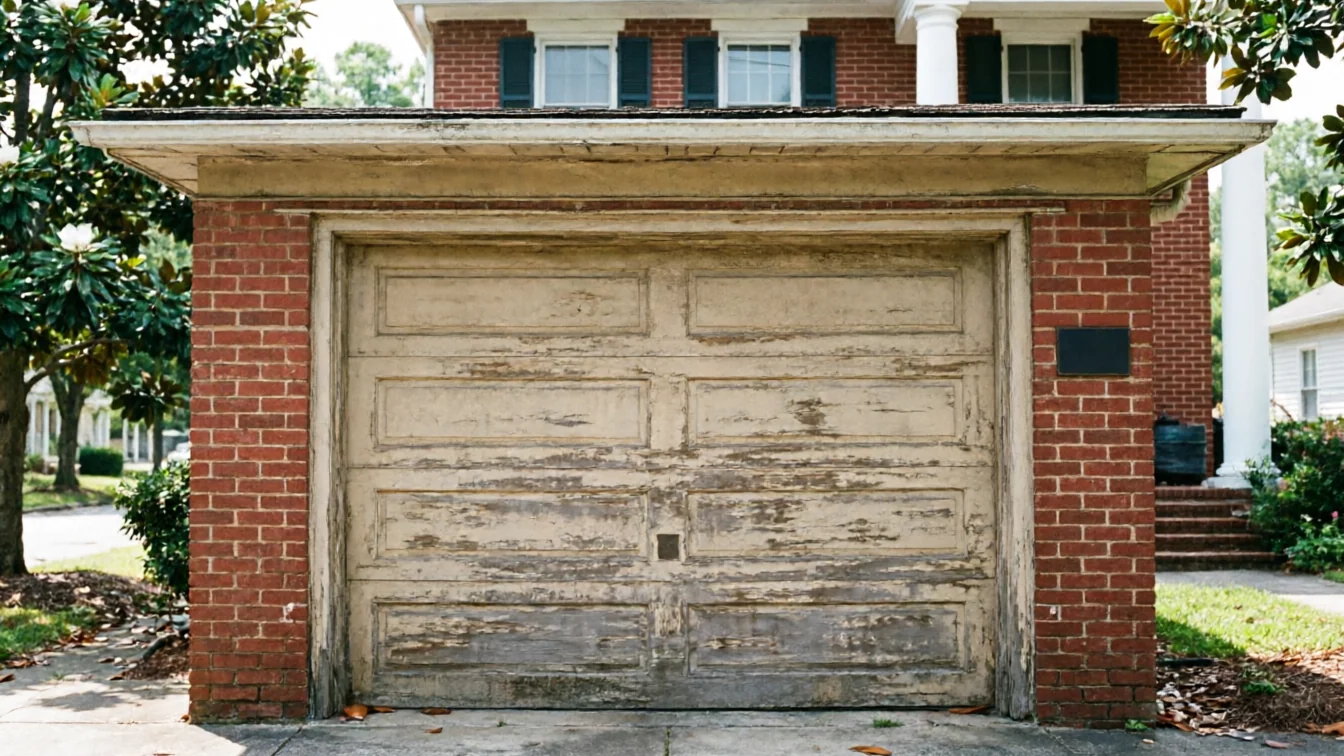
Most of the housing stock in the Lexington service area went up between 1965 and 2010, with the median build year landing around 1984. That means a lot of garage doors out there are original or close to it: steel sections, torsion springs rated for a cycle count that's long since run out, and openers from the chain-drive era. A door that age doesn't fail all at once. It gets loud, the spring sags a little more each winter, the opener starts reversing for no reason. Homeowners call us when the door finally won't move, but the warning signs were there for a year or two before that. The question we get asked constantly isn't "can you fix this" - almost anything can be patched for a while. It's whether fixing it is the right move for a door built in the 80s or 90s versus one that's already had a few repairs stacked on top of each other.
Where People Go Wrong
The most common mistake is treating a 1980s or 1990s door like it's got the same remaining life as a new one, because the panels still look fine. Panels are usually the last thing to go. The spring, the cables, the rollers, and the opener's internal gearing wear out first and separately, which means a door can look solid and still be one broken cable away from a door on the floor of the garage. People also replace the opener and assume that solves the problem, when the real issue is a spring that was sized for a lighter door twenty years ago and is now straining against sagging track. Across the 19 named communities in this area that share this same mid-80s-to-90s housing wave, we see the identical pattern: one component gets swapped, the rest of the original hardware keeps aging underneath it, and the next failure is six months out instead of six years.
What Local Conditions Do
This area sits in a mild climate band with occasional freeze days, not the deep-freeze cycling that cracks hardware up north, but enough cold snaps each winter to matter. Steel springs and cables contract in a hard freeze and expand again a few days later when temperatures climb back up, and that repeated flex is what finally snaps a spring that's already near the end of its rated cycles. It's rarely the cold itself that breaks anything - it's the swing. A door that's been fine for fifteen South Carolina summers can lose a spring on the one morning it drops into the 20s. Humidity plays a role too, working rust into springs and hinges that aren't sealed or lubricated, which is a slower problem but a steady one on original 1980s and 90s hardware that was never built with maintenance-free coatings.
The Cost of This Job
We can't quote a number here without knowing your door, but we can tell you how we think about it. With median household income in this area at $64,003 and roughly 30,144 owner-occupied houses across the service area, most of the repair-versus-replace calls we make come down to how many original components are still in play. A single broken spring on an otherwise sound 1990s door is almost always worth fixing - it's a contained repair. A door that needs a spring, cables, and rollers all at once, on top of an opener that's already failing, is usually past the point where patching makes financial sense, because you're paying labor three separate times instead of once. The honest limitation: we don't stock parts for every opener model from the 1980s, and on the oldest units, sourcing a matching part can take longer than the repair itself. That's sometimes the deciding factor as much as the wear is.
Frequently asked questions
How do I know if my garage door is original to the house?
If your Lexington home was built in the 1980s or 90s, which covers a large share of this area's housing stock, check the spring and track hardware for a manufacture stamp or date code. A door with no modern safety sensors or a single torsion spring where newer doors use two is a strong sign it's original.
Does the occasional freeze around here actually affect garage door springs?
Yes, more than steady cold would. This area's mild-with-some-freeze climate means springs and cables expand and contract repeatedly through the winter rather than staying consistently cold, and that cycling is what tends to finish off a spring that's already near the end of its life.
Is it ever worth replacing just the opener and leaving the door?
Sometimes, if the door panels, track, and spring are sound. But on a lot of the 1980s and 90s doors we see in this area, the opener failing is a symptom of strain elsewhere, not an isolated problem, so it's worth having the whole system checked before you spend on just the opener.
Related garage door services in Lexington
More garage door guides
Book garage door service in Lexington
Call now or request a quote - tell us what the door is doing and where you are.