
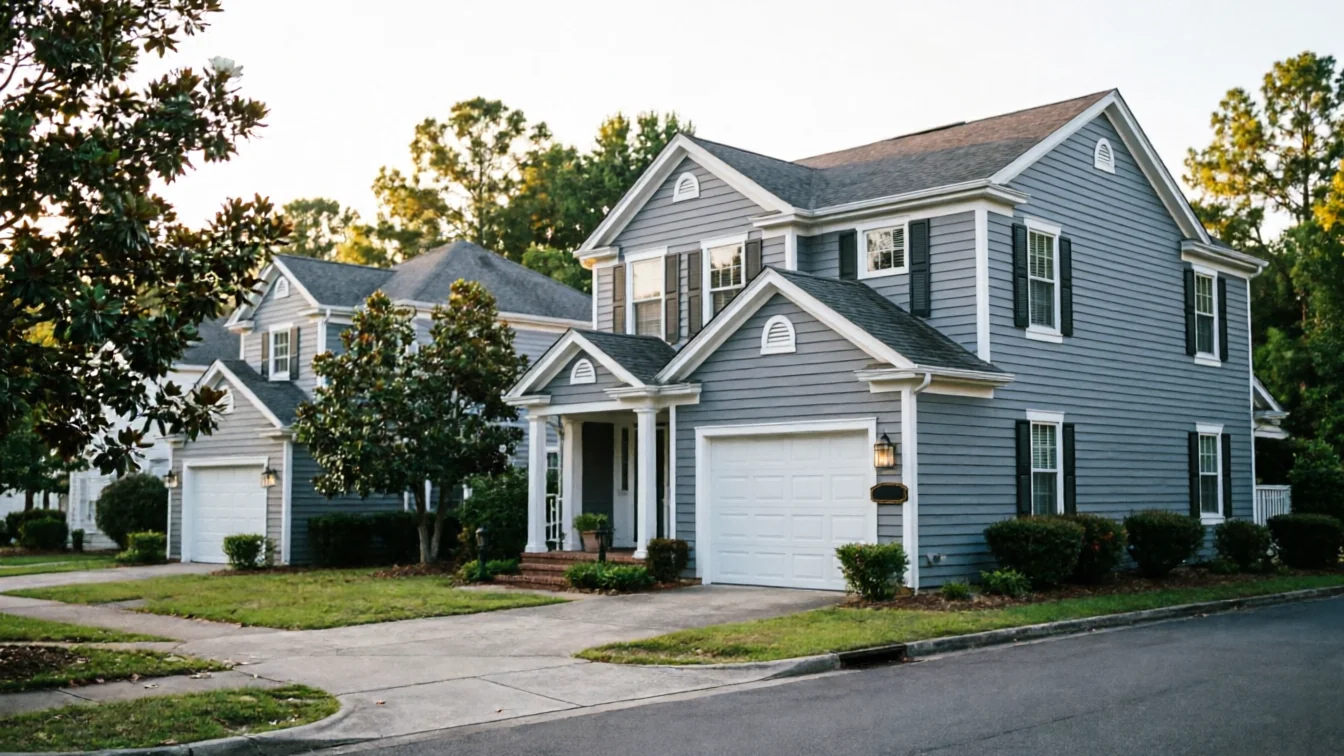
Lexington, SC · Garage Door Service
Garage Door Repair for Seven Oaks' 1970s Housing Stock
Seven Oaks homes date mostly to the early 1970s, six miles from Lexington. We fix the torsion springs, openers, and tracks typical of that era's doors.
- Repairs & new doors
- Springs & openers
- Serving 7 nearby communities
What We Do Not Do
We don't keep a crew or a truck stationed in Seven Oaks. We run out of Lexington, six miles up the road, and every job here is a dispatched call, not a drop-in. If you need a same-hour fix at 11pm, we're honest that we can't promise that from six miles out the way a shop sitting on your street could.
We also don't try to force a repair onto a door that's past it. A lot of the one-piece, non-sectional doors still hanging in this area were never built to take a modern opener's duty cycle, and bolting a new opener onto 50-year-old track hardware is a way to create a second service call, not avoid one. When the door itself is the problem, we'll tell you that instead of selling you a patch.
We don't install or service anything outside garage doors, openers, springs, and the tracks and cables that go with them. No gate operators, no general handyman work. If that's what you need, we're not the right call, and we'd rather say so up front.
This Area's Housing
Most houses in Seven Oaks went up around 1973, which puts this neighborhood noticeably ahead of the broader Lexington service area's median build year of 1984. That ten-year gap matters more than it sounds like it should. A door and opener installed in the early-to-mid 1970s is a different animal from one installed in the late '80s or '90s: different spring mounting, different drum sizes, often a different door material altogether.
Across the wider Lexington coverage area, most housing dates from 1965 to 2010, with the mid-80s as the typical build year. Seven Oaks sits on the older end of that range, which is exactly why the hardware here skews toward the earlier, simpler designs - fewer safety cables, fewer modern bottom brackets, and springs sized for doors that are heavier per square foot than what gets built today.
The area's household income runs about $64,003, matching the figure for the Lexington service area as a whole. That's useful context: this isn't a neighborhood where doors get replaced on a whim. Owners here tend to repair what's fixable and replace only when a door is genuinely done, which lines up with what we see on most calls.
How That Shows Up in the Door
A door from the early 1970s usually means a one-piece or early sectional steel door running on a torsion spring sized for a heavier, less-insulated panel than anything sold today. When that spring breaks, it's not a universal part - it's a specific wind and wire gauge that a newer big-box replacement spring often doesn't match without modification.
The climate here is mild with occasional freezes, which isn't brutal on hardware, but 50 years of seasonal expansion and contraction still works on original lift cables, worn rollers, and the galvanized coating on older tracks. We see pitted track rails and stretched cables on these older doors more often than we see them on anything built after 1990.
Openers are the other tell. A lot of these houses got a chain-drive opener retrofitted sometime after the original build, bolted onto track that wasn't designed for it. That mismatch is a common source of grinding noise and off-center travel, and it's usually a hardware alignment problem, not an opener problem, no matter what the opener's diagnostic light says.
The Usual Work Here
On Seven Oaks calls, the most common job is torsion spring replacement sized correctly for the older door weight rather than a generic off-the-shelf spring. Close behind that: track realignment on doors where a newer opener was added to original 1970s hardware, and cable replacement where the galvanized coating has worn through after decades of use.
We also get a fair number of calls for panel damage on the older steel doors - these don't have the layered insulation of newer doors, so a dent from a backed-into bumper or a basketball tends to show as a clean crease rather than absorbing the hit. Replacing a single panel is sometimes possible if the door model is still around; on older one-piece doors it often isn't, and full replacement ends up being the honest answer.
Opener swaps come up less often than you'd think, since a lot of these original openers have already been replaced once. When we do swap one, the job usually includes correcting the track and bracket work from whoever did the original retrofit.
Frequently asked questions
Do you have a shop or crew based in Seven Oaks?
No. We run out of Lexington, about six miles away, and dispatch out to Seven Oaks for scheduled calls. We don't keep equipment or staff stationed in the neighborhood, so we're upfront that we can't offer the same immediacy a local depot could.
Why does my spring keep breaking when my neighbor's door is fine?
If your house is one of the older ones from the early 1970s, your door may be running a torsion spring sized for an older, heavier panel. A mismatched or undersized replacement spring wears out faster under that load, which is a common issue on doors from this era.
Is it worth replacing a 1970s-era door or just repairing it?
Depends on the door. If the panels are intact and it's just hardware - springs, cables, rollers - repair usually makes sense. If the panel is creased or the door is a discontinued one-piece style, parts can be hard to source, and replacement is often the more honest answer.
My opener runs but the door barely moves evenly - what's that?
On houses here, that's often an opener added later to original 1970s track and bracket hardware that wasn't matched to it. It shows up as grinding or off-center travel and is usually a hardware alignment fix, not an opener defect.
Garage door services in Seven Oaks
Every service our crew runs in Seven Oaks, SC.
Book garage door service in Lexington
Call now or request a quote - tell us what the door is doing and where you are.